Protecting your home before renovation begins.
Floors, furniture, doors and access routes: a closer look at the preparation behind a carefully managed home renovation.
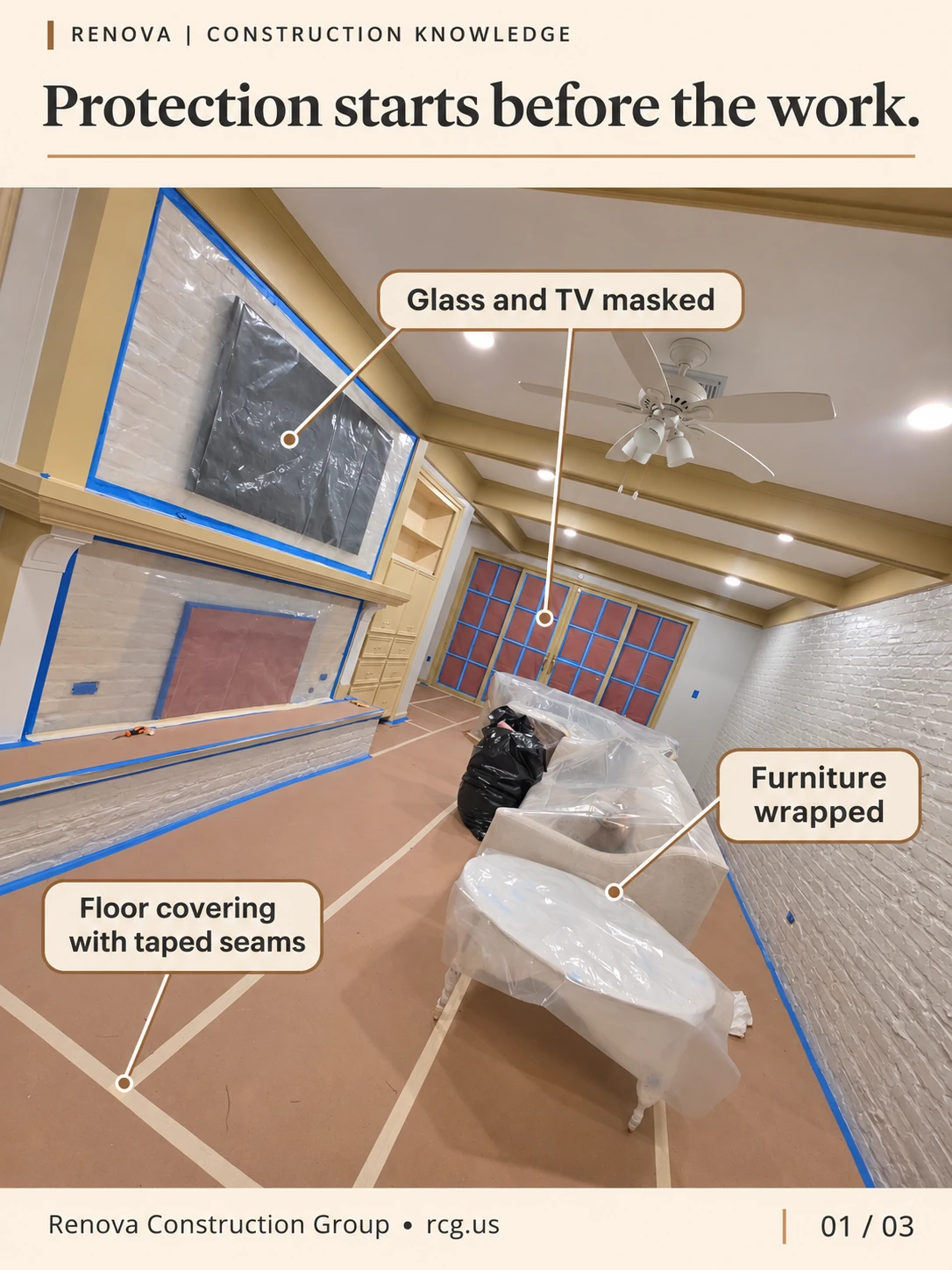
Before the first tool comes out, there is work to do. Floors, furniture, doors and the route through the house all deserve attention before a renovation begins. Our recent LinkedIn cover-up post showed this less visible part of the job: preparing the home around the work.
For a homeowner planning a kitchen, bathroom or larger home renovation in Houston, the protection plan is a useful part of the early conversation. It explains how the team intends to move through the property and care for the finishes that are staying.
Start with a walkthrough.
A pre-work walkthrough brings the existing space into focus. Which finishes will remain? What furniture can be moved? Where will materials enter, and which rooms will the household continue to use? Photos and notes create a shared record of existing conditions before the work starts.
This is also the time to point out delicate finishes, recently installed flooring, sentimental pieces and areas that need special attention. The coverings should suit the surface and the work planned around it.
Protect the room and what stays inside it.
The living-room image from our post shows floor covering with taped seams, wrapped furniture, and masking over glass and a television. Each detail addresses something that will remain while work takes place nearby.
Protection needs to be considered as a complete setup. Floor coverage, edges, furniture and adjacent surfaces belong in the same discussion. The material and method should be selected for the finish underneath; the same covering is not right for every surface or activity.
Protect the route, too.
The work area is only one part of the house that the team uses. Deliveries, equipment and removed materials travel between the entrance and the room under renovation. Hallways, doorways and thresholds deserve the same attention.
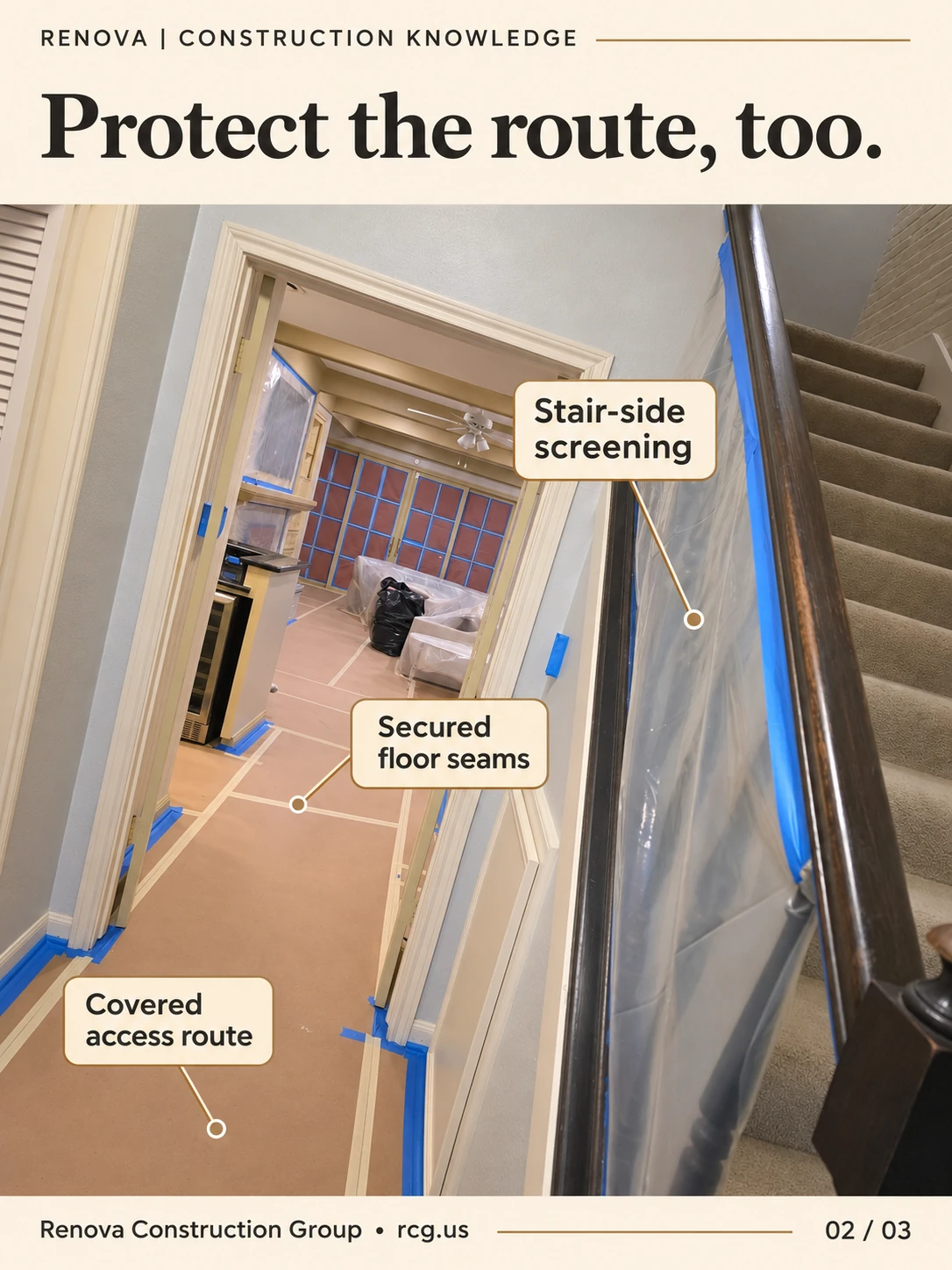
The hallway photograph highlights a covered route and secured seams, with screening alongside the stair. It makes the point clearly: preparation extends beyond the room where the visible work will happen.
Small details deserve protection.
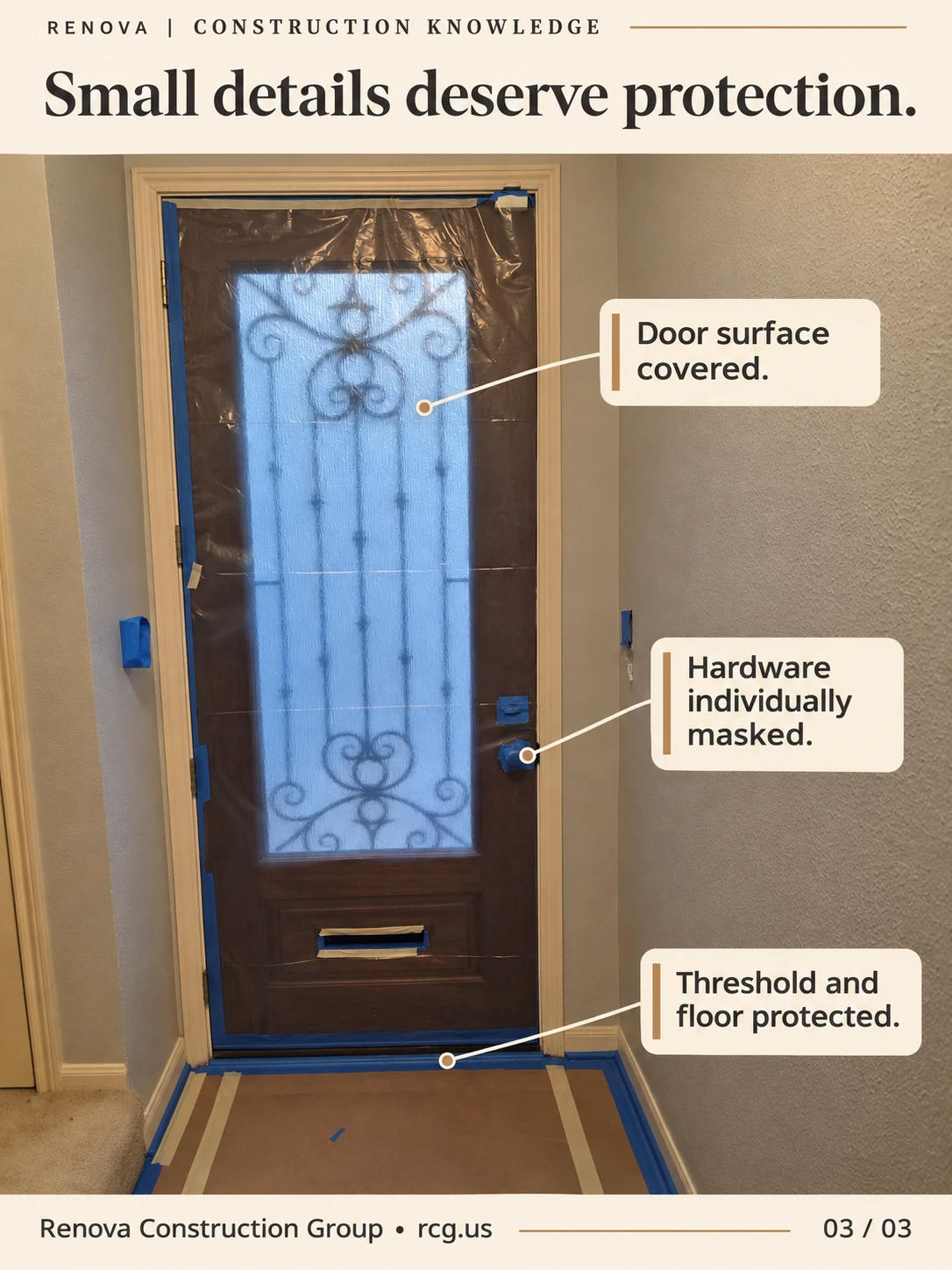
An entry door may remain in place throughout the project, yet it is used repeatedly. The third image focuses on its surface, individual hardware and the threshold below. These smaller details are easy to overlook when the conversation is focused on a new kitchen or bathroom.
Keep protection connected to the work.
The initial cover-up is a starting point. As trades and materials move through the home, the team should review the coverings, address damage or loose edges, and coordinate cleanup with the next activity. Protection belongs in the project sequence, alongside deliveries and construction tasks.
Surface protection and dust containment also serve different purposes. These photographs illustrate coverings and masking; they do not establish a complete demolition dust-control setup. Dust controls need to be planned for the actual work. For projects involving lead-based paint, the EPA’s renovation guidance explains the separate role of work-area containment.
What to ask before work begins.
- Which finishes and belongings will stay, and how will they be protected?
- Which route will the team use for deliveries and debris removal?
- How will coverings and cleanup be managed as the work progresses?
- What dust-control measures are appropriate for the planned activities?
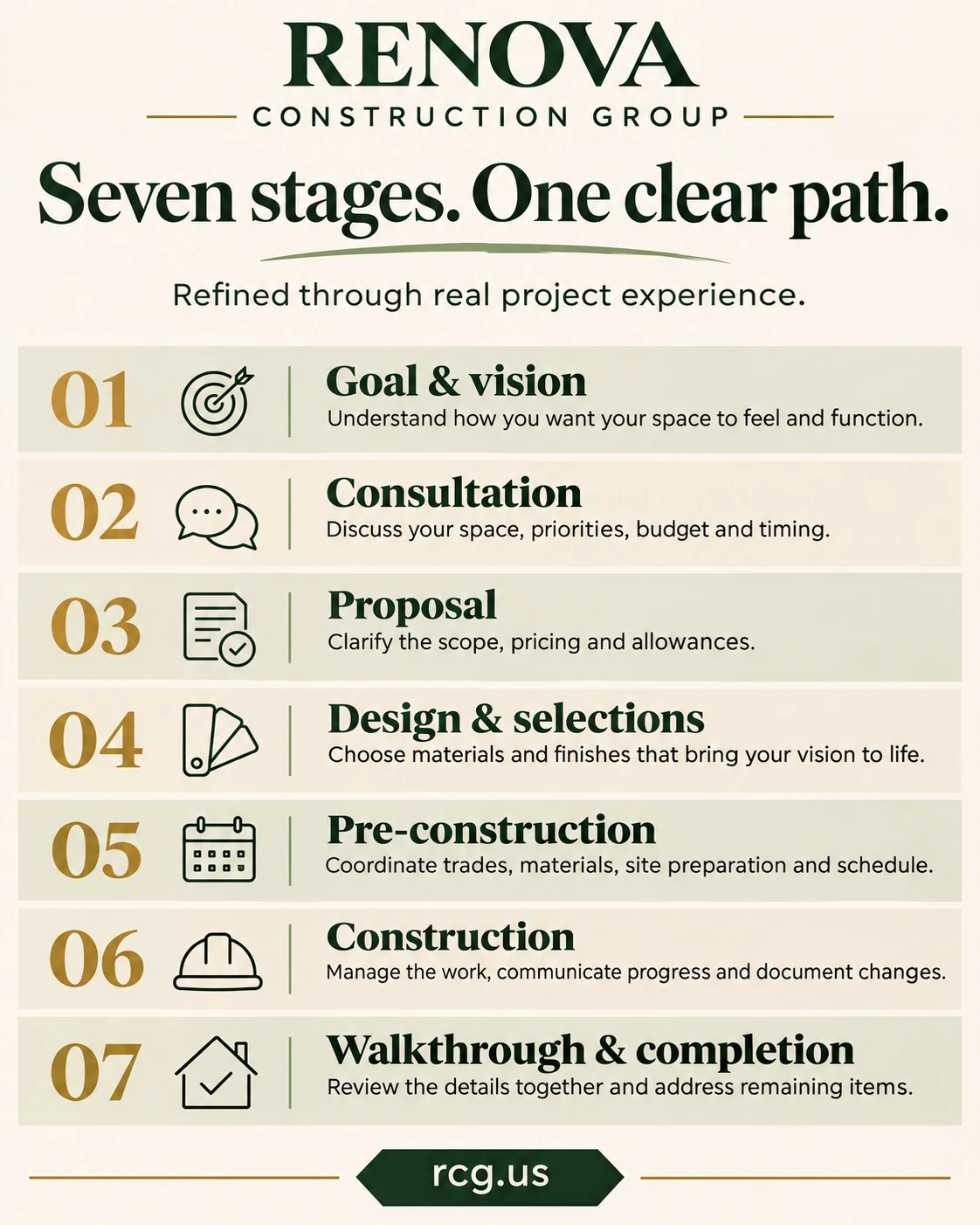
At Renova, preparation is part of the wider conversation about your home. Explore our seven-stage renovation process to see where site preparation fits, or tell us about your project.